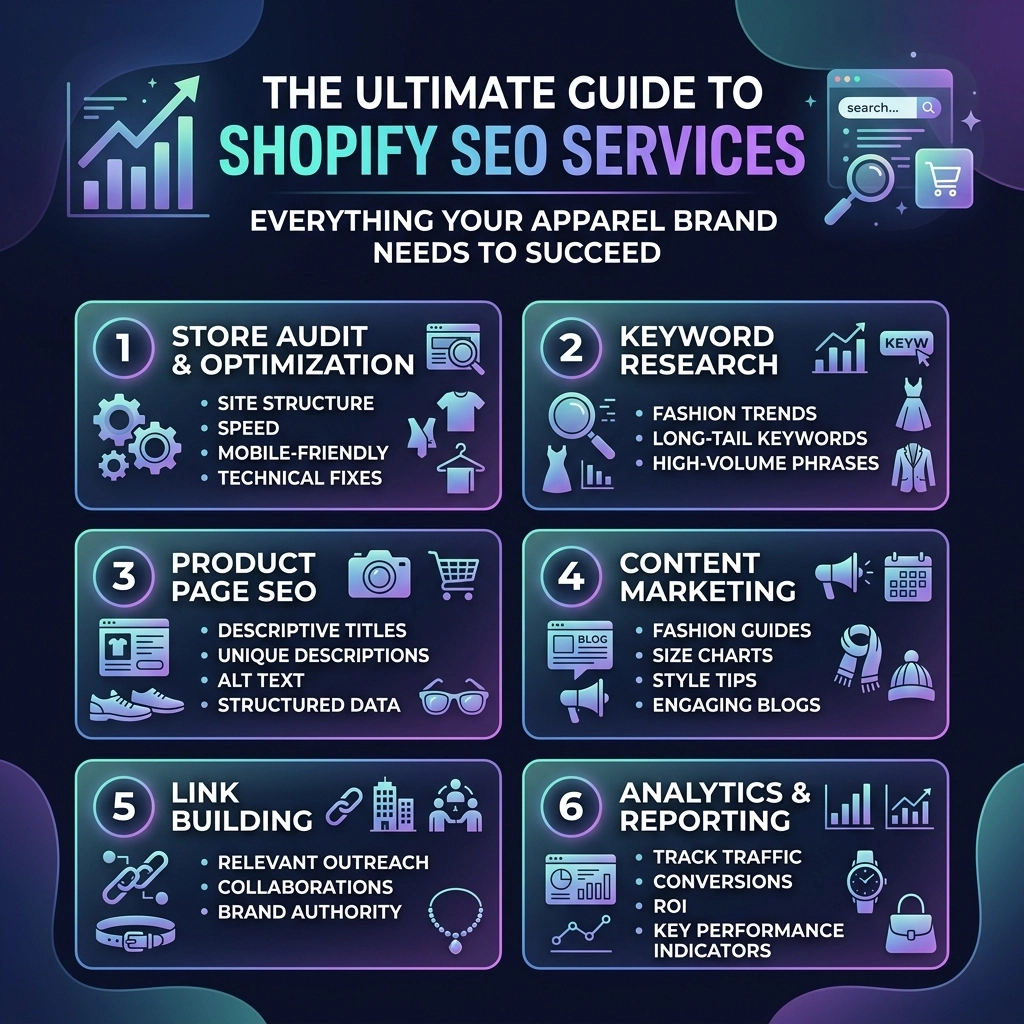
Scaling an apparel brand in 2026 isn't just about having the trendiest designs or the flashiest Instagram ads. It’s about being found when a customer types "sustainable linen dresses" or "oversized vintage hoodies" into Google.
If you aren't appearing on page one, you're essentially leaving money on the table for your competitors to grab.
Shopify is a powerhouse for D2C brands, but its out-of-the-box SEO isn't a "set it and forget it" solution. To truly dominate the fashion and beauty space, you need a specialized approach. Whether you are a solo founder or a growing team, this guide will walk you through the high-impact Shopify SEO services and strategies that turn browsers into buyers.
Why Apparel Brands Struggle with SEO (and How to Fix It)
Fashion is visual, fast-paced, and highly seasonal. This creates a unique set of challenges for search engine optimization. Most apparel brands face "thin content" issues because they rely on images rather than text. Others struggle with Shopify’s rigid URL structure.
The goal isn't just to rank; it’s to rank for the right terms. You want visitors who have "commercial intent": people ready to open their wallets.
Start small, stay creative, and focus on the systems that scale.

Pillar 1: The Technical Foundation
Before you write a single blog post, your "house" needs to be in order. Search engines prioritize sites that are fast, secure, and easy to crawl.
1. Site Speed and Core Web Vitals
In the world of apparel, high-quality imagery is non-negotiable. However, those 5MB 4K lifestyle shots are killing your load times. Google's Core Web Vitals are now a major ranking factor.
- Compress Images: Use WebP format to maintain quality while slashing file size.
- App Audit: Every app you install adds a snippet of code that can slow down your site. If you aren't using it, delete it.
- Shopify Website Design: Opt for a lightweight, performance-optimized theme. Professional Shopify website design ensures your site looks premium without sacrificing speed.
2. Mobile-First Optimization
Over 70% of fashion searches happen on mobile. If your "Add to Cart" button is hard to click on an iPhone, your SEO efforts are wasted. Google uses mobile-first indexing, meaning it looks at your mobile site version to determine your rankings.
3. Fixing Duplicate Content
Shopify has a habit of creating multiple URLs for the same product (e.g., when a product is featured in two different collections). Ensure your technical setup uses canonical tags correctly so Google knows which page is the "master" version.
Pro Tip: Don't let your "Out of Stock" pages disappear. Instead of 404ing them, keep the page live and offer a "Notify me when back in stock" option or suggest similar products to keep the SEO value.
Pillar 2: Mastering Collection Page Architecture
For apparel brands, collection pages (Categories) are your most important assets. These pages often rank for broader, high-volume keywords like "Men’s Streetwear" or "Boho Jewelry."
Intent-Based Keyword Research
Stop guessing what customers type. Use tools like Ahrefs or Google Keyword Planner to find long-tail keywords specific to your niche.
- Generic: "Blue Shirt"
- Intent-Based: "Organic cotton blue button-down shirt for men"
Optimized Collection Descriptions
Most brands leave the description area blank. Don't do that. Write 200–300 words of helpful content at the top or bottom of your collection pages. Describe the fit, the fabric, and the "vibe" of the collection. This provides the context Google needs to rank you.
Smart Internal Linking
Link to your best-selling collections from your homepage and your blog posts. This passes "link juice" (authority) to the pages that actually generate revenue.
Pillar 3: Product Page SEO That Converts
Your product pages are where the "Trust" and "Intent" pillars meet. This is your chance to shine.
1. Unique Product Descriptions
Never use the manufacturer’s default descriptions. It’s a recipe for duplicate content penalties. Write original, punchy copy that addresses:
- The Problem: Why do they need this item?
- The Solution: How does the fabric feel? Is it true to size?
- The Motivation: Use active verbs. "Style this with…" or "Elevate your weekend look."
2. Visual SEO (Alt Text)
Search engines can't "see" your photos. They read the Alt Text. Instead of leaving it as IMG_5678.jpg, change it to womens-red-floral-maxi-dress-front-view. This helps you show up in Google Image Search: a massive traffic driver for fashion.
3. Product Schema Markup
Ever seen those search results that show the price, star rating, and "In Stock" status directly on Google? That's Schema. It makes your listing look more professional and increases your Click-Through Rate (CTR).

Pillar 4: Content Strategy for D2C Growth
SEO isn't just about product listings. It’s about becoming an authority in your niche. If you sell yoga wear, you should be writing about "The Best Morning Stretches" or "How to Choose Sustainable Fabrics."
The "Helpful Content" Framework
Google’s latest updates favor content that actually helps the user.
- Identify the gaps: What questions are your customers asking?
- Automate the workflow: Use a calendar to stay consistent.
- List your tasks: Weekly blog posts, monthly SEO audits, daily social snippets.
Never ever think of giving up on blogging. It takes 4–6 months to see real traction, but once it starts, the traffic is free and recurring.
Pros and Cons of Shopify for SEO
Every platform has its trade-offs. It's important to know what you're working with.
| Pros | Cons |
|---|---|
| Built-in SSL: Secure and trusted by Google. | Rigid URL Structure: You can't easily change /products/ or /collections/. |
| Easy Metadata: Simple interface for titles and descriptions. | Automatic Sitemaps: Good for beginners, but lacks deep customization. |
| App Ecosystem: Plenty of tools to automate technical SEO. | App Bloat: Too many apps will tank your site speed. |
Tools as Your SEO Co-Pilots
You don't have to do this alone. Think of technology as a co-pilot that handles the heavy lifting so you can focus on creativity.
- Google Search Console: The ultimate "truth" source. It tells you exactly what keywords you rank for and if there are any errors on your site.
- Ahrefs or Semrush: Great for spying on your competitors' keywords.
- Matrixify: Perfect for bulk-editing SEO metadata if you have thousands of products.
- Thriftizer Solutions: When you need expert-level growth, partnering with a Shopify Expert can save you months of trial and error.
The Growth Mindset: SEO + CRO
Traffic is vanity; conversions are sanity. You can have 100,000 visitors, but if your site design is confusing, you won't make a dime. This is why Conversion Rate Optimization (CRO) must go hand-in-hand with your Shopify SEO services.
A professional Thriftizer audit looks at the whole picture: how you get the traffic and how you keep it.
Key Insight
Good SEO gets them to the door. Good UX/UI (User Experience) gets them to the checkout. Use heatmaps to see where users are dropping off and fix those friction points immediately.
Your Next Steps: A 5-Day Implementation Checklist
Ready to move from consumption to action? Follow this simple plan:
- Day 1: Audit Your Speed. Run your site through Google PageSpeed Insights. Compress the top 10 largest images on your homepage.
- Day 2: Optimize Your Top 3 Collections. Add 200 words of descriptive content and ensure the Meta Titles include your primary keywords.
- Day 3: Fix Your Alt Text. Go through your top 20 best-selling products and update the image Alt Text to be descriptive.
- Day 4: Install Google Search Console. Check the "Indexing" tab for any errors and submit your sitemap (
yourstore.com/sitemap.xml). - Day 5: Plan Your Content. Identify 4 blog topics that answer common customer questions and schedule them for the next month.
Final Thoughts
SEO is a marathon, not a sprint. In the competitive landscape of 2026, the brands that win are those that provide the most value to their customers while maintaining a clean, fast, and search-friendly website.
Identify the gaps in your current strategy, automate what you can, and don't be afraid to ask for professional help to scale faster. Your apparel brand has a story to tell: make sure the world can find it.
Ready to dominate the search results? Explore how Thriftizer can transform your store or check out our Shopify Partner profile for specialized growth strategies.