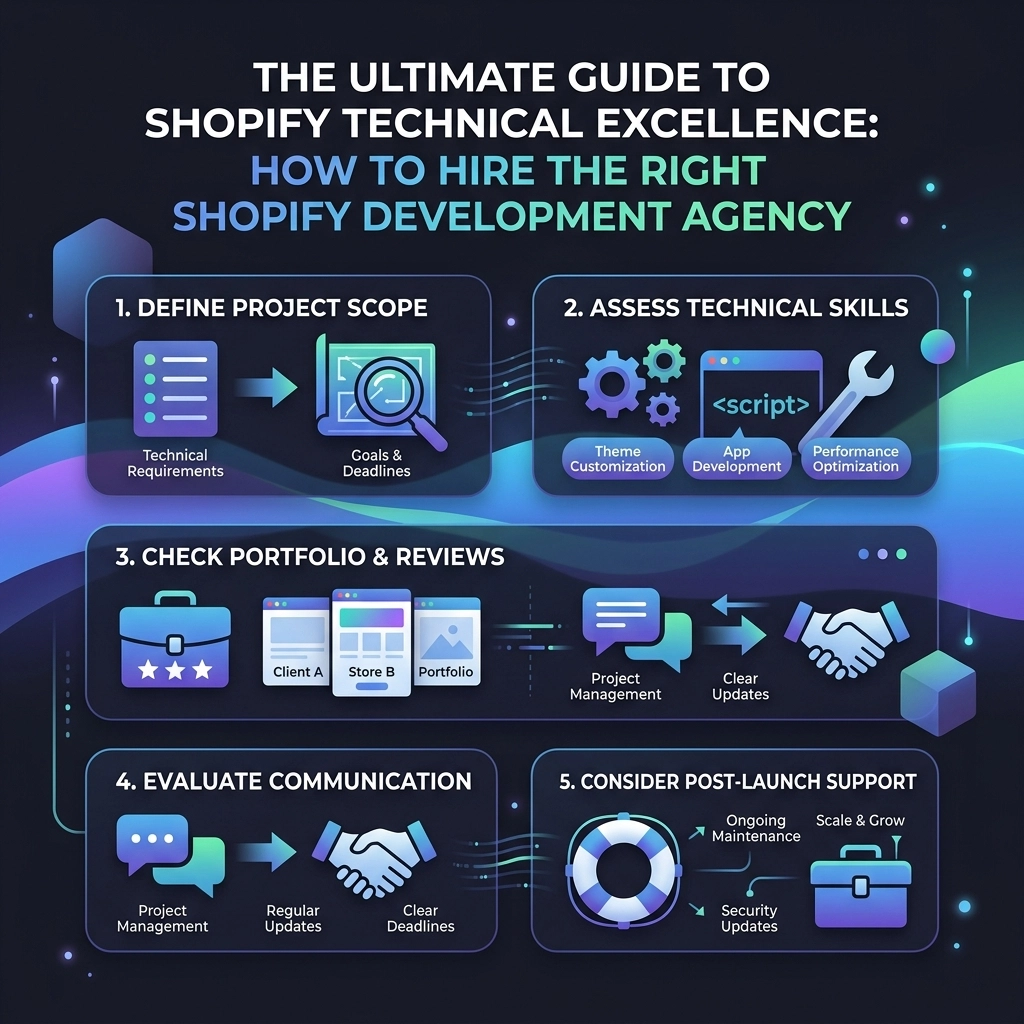
Scaling a high-growth fashion brand isn't just about the aesthetic of your collection or the strength of your latest influencer campaign. While those drive traffic, your technical foundation determines whether that traffic converts into loyal customers or bounces due to a three-second lag.
In 2026, the gap between "working" and "winning" on Shopify is defined by technical excellence. Whether you are migrating to Shopify Plus or seeking deep Shopify speed optimization, the partner you choose to handle your code is the most critical hire you’ll make this year.
This guide breaks down the framework for identifying, vetting, and hiring a Shopify development agency that doesn't just build stores but engineers growth engines.
Why Technical Excellence is Non-Negotiable for Fashion Brands
In the world of streetwear, jewelry, and high-fashion, visual storytelling is everything. However, high-resolution imagery and video-heavy homepages are the enemies of performance. A "pretty" site that takes 5 seconds to load is a liability, not an asset.
Technical excellence means your store is:
- Blazing Fast: Maintaining a high core web vitals score even with heavy assets.
- Scalable: Built with clean Liquid code or Headless architectures that don't break during 10k-user-per-minute drops.
- Flexible: Using a modular "Online Store 2.0" approach so your marketing team can swap layouts without calling a developer.

Phase 1: Identifying Your Technical Needs
Before you start browsing portfolios, you need to identify where you sit on the growth curve. Not every brand needs a $100k custom headless build; some just need a performance-tuned version of a premium theme.
1. The Speed Optimization Tier
If your conversion rates are dipping despite high traffic, your problem is likely performance. Shopify speed optimization involves more than just "optimizing images." It requires auditing third-party apps, cleaning up legacy "ghost code," and prioritizing critical CSS.
2. The Custom Development Tier
Are you outgrowing your theme's capabilities? Custom development allows you to build unique product bundles, complex loyalty logic, or bespoke checkout experiences that your competitors can't replicate.
3. The Shopify Plus Tier
For brands doing $1M+ in annual revenue, the technical requirements shift toward automation and internationalization. You need an agency that understands Shopify Plus features like Shopify Scripts, Flow, and Launchpad to automate your high-volume sales events.
Phase 2: How to Vet a Shopify Agency Like a Pro
The "Shopify Expert" tag is a great starting point, but it shouldn't be the end of your research. You need to look under the hood.
Check the Performance Pedigree
Don't just look at screenshots of their work: visit the live sites they’ve built. Run those URLs through Google PageSpeed Insights. If an agency claims to be an expert in Shopify development but their clients' sites are scoring 30/100 on mobile, move on.
Pro Tip: Ask for a "Before and After" speed report for a recent client. A true technical partner will have these metrics ready because performance is a core part of their value proposition.
Evaluate Liquid Code Quality
A great agency follows Shopify’s best practices. They use the Shopify CLI, version control (GitHub/Bitbucket), and avoid "hard-coding" values that should be editable in the Theme Editor. If they don't mention a staging environment or a GitHub-linked workflow, they are likely taking shortcuts that will cause technical debt later.
Industry-Specific Experience
A fashion brand has different needs than a SaaS company. Jewelry brands need high-zoom capabilities and intricate meta-field logic for specs. Streetwear brands need "Flash Sale" stability. Ensure the agency has a portfolio that matches your niche.

Questions You Must Ask During the Interview
When you get a lead developer or project manager on the phone, skip the small talk and get into the mechanics. Use these questions to separate the "implementers" from the "architects."
- "How do you handle third-party app bloat?"
- Correct Answer: They should suggest custom-coding features whenever possible to reduce the reliance on heavy, script-heavy apps.
- "What is your process for Shopify speed optimization during a theme build?"
- Correct Answer: They should mention lazy-loading, minifying assets, and using Shopify's native features over external libraries.
- "How do you ensure our store remains editable for our non-technical team?"
- Correct Answer: They should focus on building custom "Sections" and using Metaobjects so you can update content without touching a line of code.
- "Can you walk us through a recent Shopify Plus migration or upgrade?"
- Correct Answer: They should discuss data integrity, SEO redirection strategy, and how they leveraged Plus-exclusive tools to solve a specific business problem.
Red Flags to Watch Out For
In your search for the perfect Shopify agency, stay alert for these warning signs:
- The "Yes Men": If an agency agrees to every single feature request without questioning the impact on load speed or UX, they aren't partners; they are order-takers.
- App Obsession: If their first solution to every problem is "there’s an app for that," they are building a fragile ecosystem that will eventually slow down your store and increase monthly recurring costs.
- Vague Timelines: Technical projects have variables, but an experienced agency should have a clear, milestone-based roadmap.
- No Post-Launch Support: E-commerce is not a "set it and forget it" business. If they don't offer maintenance or support retainers, you’ll be left stranded when a Shopify API update changes how your custom checkout works.

Pros and Cons of Agency Types
| Agency Type | Pros | Cons | Best For |
|---|---|---|---|
| Large Enterprise Agency | Massive resources, 24/7 support, handled major global brands. | Very expensive, you might be a "small fish," slower communication. | Global fashion houses with $50M+ revenue. |
| Boutique Shopify Agency | Direct access to founders, specialized expertise, agile workflows. | Limited bandwidth, may have a waitlist. | High-growth D2C brands ($1M – $20M revenue). |
| Solo Freelancer | Most cost-effective, highly personal. | Single point of failure, limited skill set (e.g., great at design, bad at backend). | Early-stage startups or small task-based fixes. |
The "Technical Excellence" Framework: 3 Pillars
To truly succeed, your relationship with your agency should be built on three pillars. Use these to guide your expectations.
Pillar 1: Discovery and Architecture
Never skip the discovery phase. This is where the agency maps out your data structure, app stack, and user journeys. A solid architecture prevents you from having to rebuild six months down the line.
Pillar 2: Performance-First Development
This is where the Shopify development happens. Every line of code should be written with the end-user's device in mind. Shopify speed optimization isn't a final step; it's a philosophy applied from the first line of CSS.
Pillar 3: Scalability and Intent
Every feature should have a purpose. Does this custom product builder drive AOV? Does this international expansion setup reduce friction for UK customers? Tech for tech's sake is a waste of capital.

Key Insight: Never ever think of giving up on performance for the sake of a flashy animation. In the mobile-first world of fashion e-commerce, smooth beats flashy every single time.
Moving From Consumption to Implementation
Hiring an agency is a major investment. Don't rush it. Start small, stay creative, and focus on the technical details that your competitors are ignoring.
If you are looking for a partner that treats your code like a high-performance engine, explore how we handle complex builds at Thriftizer. We specialize in bridging the gap between high-end fashion aesthetics and hardcore technical performance. You can also find our verified track record on the Shopify Expert Directory.
Your Next Steps Checklist:
- Audit your current site: Use Google PageSpeed Insights and identify your biggest bottlenecks.
- Define your "Must-Haves" vs. "Nice-to-Haves": Be clear about what features are essential for your next growth phase.
- Shortlist 3 agencies: Look for those with specific experience in fashion or your specific niche.
- Request a technical walkthrough: Ask them to show you the backend of a store they recently built.
- Check references: Speak to at least two current or former clients about their communication and post-launch support.
- Start with a Discovery Project: Before committing to a full build, hire the agency for a paid discovery or audit to see how they work.
Technical excellence isn't a destination; it's a standard. By hiring the right Shopify development agency, you aren't just buying a website; you're securing the future of your brand. Keep your code clean, your speed high, and your focus on the customer.