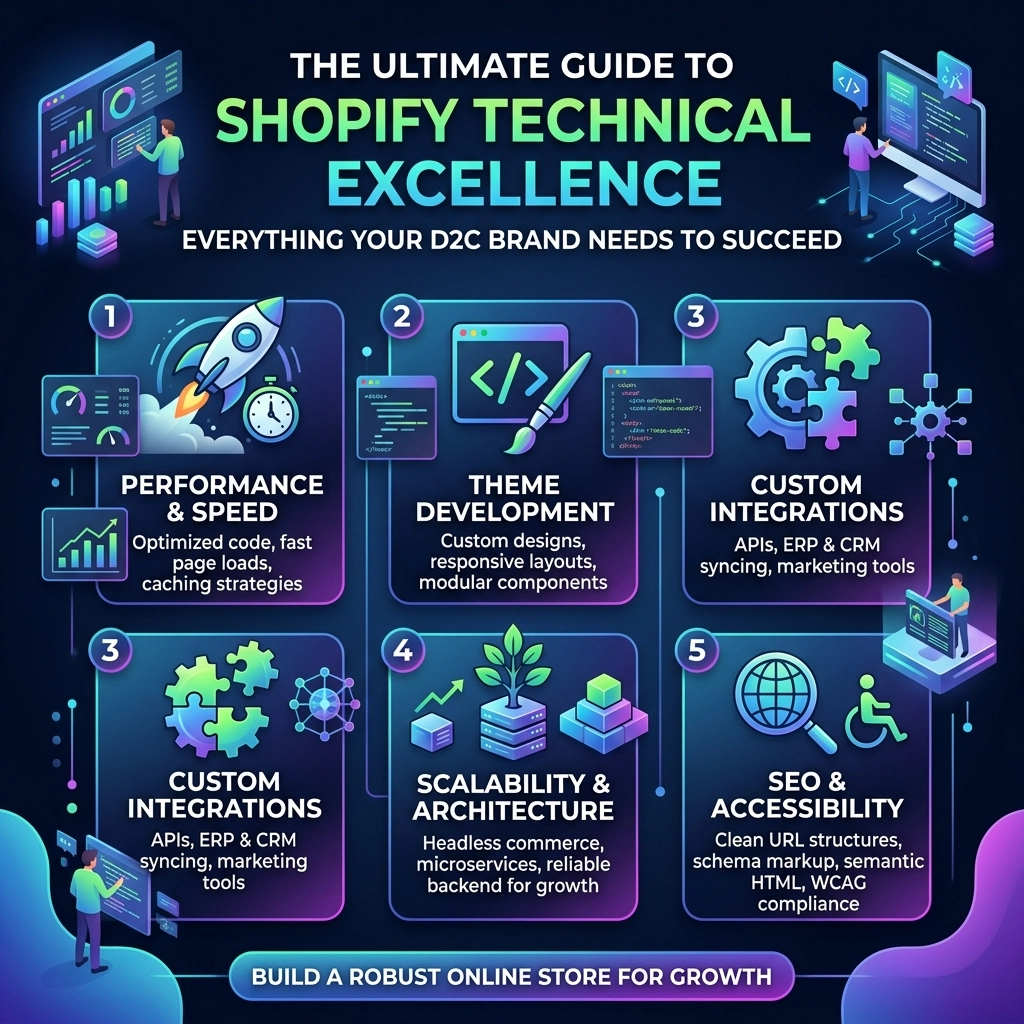
In the high-stakes world of Direct-to-Consumer (D2C) commerce, particularly within the fast-moving fashion, beauty, and streetwear niches, your website is no longer just a digital storefront. It is your flagship store, your primary salesperson, and your brand's most critical technical asset. By 2026, the gap between "standard" Shopify setups and "technically excellent" platforms has widened significantly.
If your brand is currently scaling toward the mid-seven or eight-figure mark, you probably realize that generic themes and basic app stacks are no longer enough. To succeed, you need a system-based approach to Shopify development that prioritizes speed, custom functionality, and automated workflows. This guide breaks down the pillars of technical excellence that will save you time, increase your efficiency, and ultimately drive your revenue to new heights.
Pillar 1: The Performance Foundation (Shopify Speed Optimization)
In an era where attention spans are measured in milliseconds, site performance is your most important conversion rate optimization (CRO) tool. For a luxury jewelry brand or a streetwear label dropping a new collection, a 1-second delay can mean thousands of dollars in lost sales.
Why Speed is the Ultimate D2C Metric
Google’s Core Web Vitals: specifically Largest Contentful Paint (LCP) and Cumulative Layout Shift (CLS): are now critical ranking factors and user experience benchmarks. A technically excellent Shopify store should aim for a sub-2.5 second LCP on mobile.
Technical Strategies for Speed:
- Critical CSS Inlining: Don't make the browser wait to load your entire stylesheet before showing the "above-the-fold" content.
- Image Optimization Beyond the Basics: Use WebP formats and implement strict "srcset" attributes for responsive imagery. This is vital for fashion brands that rely on high-resolution photography.
- App Audit and Script Management: Every app you install adds a "tax" to your load time. A professional Shopify agency will often replace heavy apps with lightweight, custom Liquid code to achieve the same result without the performance hit.
- Lazy Loading Strategy: Only load high-quality assets as the user scrolls to them, ensuring the initial page load is lightning-fast.

Key Insight: Shopify speed optimization isn't a one-time project; it’s a continuous maintenance task. As you add new marketing pixels or features, you must constantly monitor how they impact your performance budget.
Pillar 2: Custom Development vs. Theme Limitations
While the Shopify Theme Store offers incredible starting points, high-growth brands eventually hit a wall with "off-the-shelf" solutions. Technical excellence means moving beyond the "settings" panel and into custom Liquid, JavaScript, and specialized API integrations.
Building for the Unique Fashion & Streetwear Experience
Streetwear brands often require complex "drop" logic, such as countdown timers that sync with inventory or gated "early access" pages for VIP members. Beauty brands might need interactive quiz engines to recommend the right skincare routine.
Custom Shopify development allows you to:
- Create Unique Product Page Layouts: Move beyond the standard "image on left, text on right" to create immersive, editorial-style experiences.
- Implement Advanced Filtering: For jewelry brands with hundreds of variants (metal type, stone, size), custom AJAX-based filtering allows customers to find products without a single page reload.
- Develop Bespoke Bundling Logic: Standard Shopify apps for bundling can be clunky. Custom development allows for "Build Your Own Box" experiences that feel native to your brand.
Never ever think of giving up on a creative vision just because a theme doesn't support it. With the right technical partner, the platform is virtually limitless.
Pillar 3: Leveraging Shopify Plus for High-Growth Brands
If you’re doing over $1M in annual revenue, moving to Shopify Plus is often the smartest technical move you can make. It’s not just about the lower transaction fees; it’s about the exclusive technical features that act as "co-pilots" for your growth.
Automation with Shopify Flow and Launchpad
For many D2C founders, manual tasks are the biggest bottleneck. Shopify Plus provides tools to automate the mundane:
- Shopify Flow: Automatically tag customers based on buying behavior, hide out-of-stock products, or alert your team when a high-value customer places an order.
- Launchpad: This is a game-changer for fashion drops. You can schedule theme changes, price adjustments, and password-protected pages to go live at a specific second, then revert automatically when the sale ends.
The Power of Checkout Extensibility
One of the biggest technical shifts in 2026 is the move toward Checkout Extensibility. This allows you to customize the checkout experience: adding upsells, trust badges, or custom gift messaging: without breaking the secure, high-converting core of the Shopify checkout.

Pillar 4: The SEO and Content Strategy Layer
Technical excellence also extends to how search engines "read" your site. For jewelry and fashion brands, ranking for long-tail keywords like "sustainable gold vermeil necklaces" or "oversized heavyweight streetwear hoodies" requires a structured technical SEO approach.
The Technical SEO Checklist:
- Structured Data (JSON-LD): Ensure your products, reviews, and FAQs are correctly marked up so Google can display "Rich Snippets" (like star ratings and prices) directly in search results.
- Clean URL Structures: Avoid the "collections/all" mess. Ensure your primary categories have clean, descriptive URLs.
- Hreflang for International Scaling: If you are selling globally, your technical setup must correctly signal which version of the site belongs to which country to avoid duplicate content penalties.
Pro Tip: Use your blog as a "Discovery" hub. Instead of just posting news, create "how-to" guides and style lookbooks that link back to your product collections. This creates a powerful internal linking structure that search engines love.
Challenges of Scaling: Managing the "Tech Debt"
As you grow, you will face challenges. It’s better to anticipate them now than to scramble later.
- The App Trap: Installing too many apps leads to "code bloat." Regularly audit your stack. If an app isn't actively making you money or saving you time, delete it.
- Data Silos: As you scale, ensure your Shopify data talks to your Klaviyo, your ERP, and your customer service tools. Technical excellence is about having a "Single Source of Truth."
- Mobile-First vs. Mobile-Only: While 80%+ of your traffic might be mobile, don't ignore the desktop experience for high-ticket items like luxury jewelry, where customers often do their final research on a larger screen.
Your Technical Roadmap: A 5-Step Checklist
Transitioning from a standard store to a high-performance D2C machine requires a clear plan. Start small, stay creative, and follow these steps:
- Run a Performance Audit: Use PageSpeed Insights and Shopify's built-in reports to identify your biggest bottlenecks.
- Optimize Your Asset Delivery: Compress images, clean up old app code, and implement lazy loading.
- Define Your "Custom" Needs: Identify the one feature that would make your customer experience unique (e.g., a custom size finder or a loyalty dashboard) and invest in Shopify development to build it.
- Automate One Major Workflow: Use Shopify Flow to automate a task that currently takes your team more than 2 hours a week.
- Partner with Experts: Don't try to be a coder and a CEO at the same time. Working with a specialized Shopify agency allows you to focus on brand and product while the technical heavy lifting is handled by pros.

Why Technical Excellence is Your Competitive Edge
In the crowded D2C landscape, your brand's voice is what gets people to the site, but your site's technical performance is what gets them to buy. When your store is fast, intuitive, and unique, you build immediate trust.
At Thriftizer, we specialize in helping high-growth fashion and beauty brands navigate these technical complexities. Whether it's custom development or deep Shopify speed optimization, our goal is to turn your store into a high-converting asset. You can find us and see our track record of success on the Shopify Expert directory.
Next Steps for Your Brand:
- Audit: Review your current site speed today.
- Consolidate: Remove at least two apps you haven't used in the last 30 days.
- Plan: Outline your biggest "technical friction" point and set a date to solve it.
- Scale: If you’re ready to level up, get in touch with us to discuss a custom technical strategy tailored to your niche.
Building a D2C powerhouse isn't about luck; it's about building a better system. Start today, and let technical excellence be the engine that drives your brand’s future.