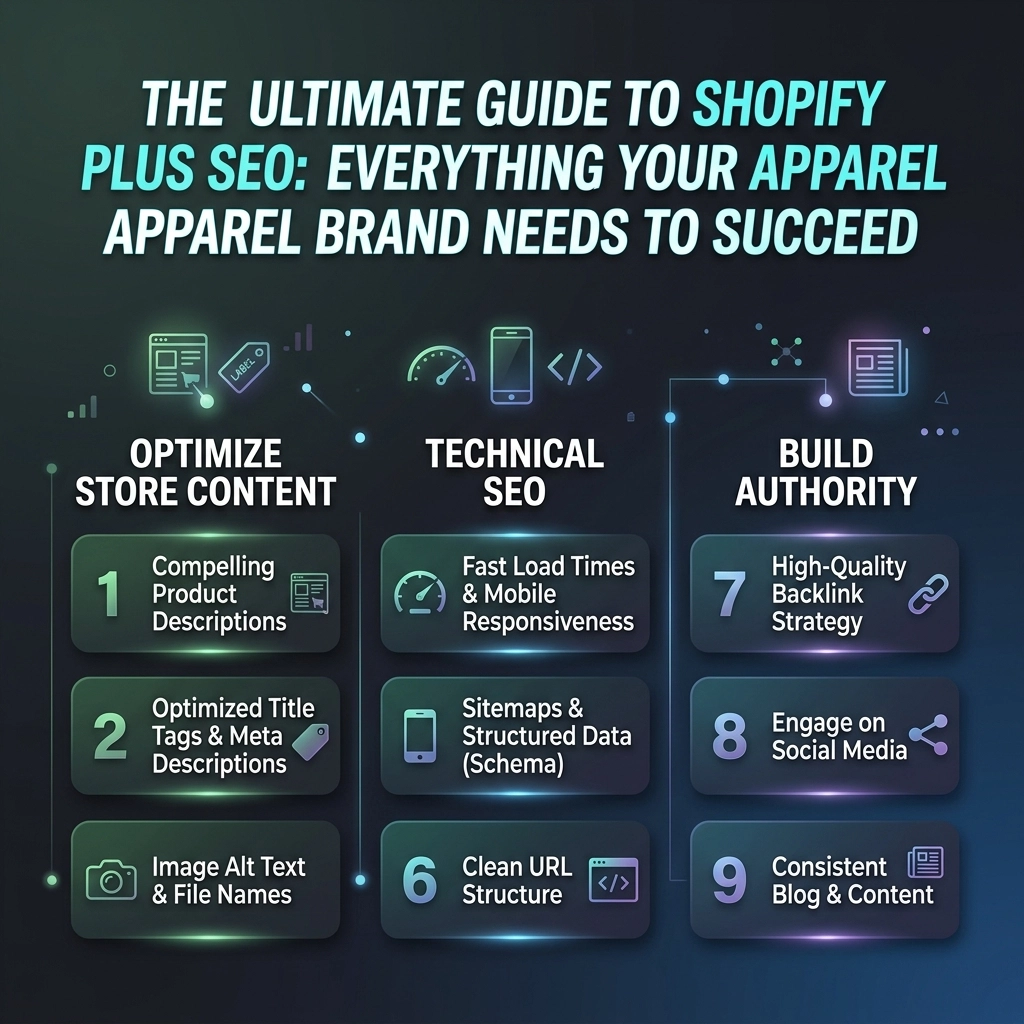
Scaling an apparel brand to the enterprise level is an exhilarating ride, but it comes with a unique set of technical hurdles. If you are running on Shopify Plus in 2026, you already know the platform is a beast when it comes to handling high-volume traffic and complex flash sales. However, having the "Plus" badge doesn't automatically mean you’ll rank #1 on Google.
In the world of D2C fashion and streetwear, competition is fierce. You aren't just competing with other boutiques; you’re fighting for real estate against global giants. To win, your Shopify Plus SEO strategy needs to be as sharp as your brand's aesthetic. This guide will move beyond the basics of "editing your meta tags" and dive into the high-level strategies that turn your store into a search engine powerhouse.
The Shopify Plus Edge: Why It Matters for SEO
Shopify Plus offers several features that standard plans don't, and from an SEO perspective, these are your secret weapons. You have more control over the checkout experience, expanded API access, and the ability to manage multiple international stores under one roof.
For an apparel brand, this means you can create a highly customized Shopify website design that doesn't just look pretty but loads at lightning speed. It means you can handle "drops" without the site crashing and maintain your search rankings even when inventory fluctuates wildly.
The Power of International Expansion
One of the biggest SEO wins for Plus users is the ability to easily launch expansion stores. Whether you’re targeting the UK streetwear scene or the Australian summer market, Shopify Plus allows you to manage localized versions of your site.
Pro Tip: Don't just clone your US store. Use hreflang tags correctly to tell Google which version of the site to show in which country. This prevents duplicate content issues and ensures your customers see the right currency and shipping info immediately.

Pillar 1: Technical SEO for Large-Scale Fashion Catalogs
Technical SEO is the foundation. If Google’s bots can’t crawl your site efficiently, your beautiful lookbooks and high-fashion photography won't matter.
1. Mastering Collection Page Filters
In the apparel world, "filtering" is everything. Users want to sort by size, color, material, and price. However, many filtering apps create "junk" URLs that can confuse search engines or lead to massive duplicate content issues.
For Shopify Plus users, we recommend using a system that utilizes AJAX for filtering but maintains SEO-friendly URLs for your primary categories. If you have a collection for "Men's Hoodies," and a user filters by "Black," you need to decide if "Black Men's Hoodies" is a page you want to rank for. If it is, it needs a dedicated, clean URL and unique meta data.
2. Speed is the New Black
Page speed is a major ranking factor in 2026. Apparel stores are notoriously heavy because of high-resolution images and video backgrounds.
- Use WebP or AVIF formats: These provide high quality at a fraction of the file size.
- Implement Lazy Loading: Only load images as the user scrolls down the page.
- App Audit: Shopify Plus stores often suffer from "App Bloat." Every time you add a new upsell or social proof app, you add a script that can slow down your site. Regularly audit your apps and remove anything that isn't pulling its weight in conversions.
3. Handling JavaScript Rendering
Modern Shopify themes often rely heavily on JavaScript for dynamic elements. While Google has gotten better at rendering JS, it's not perfect. If your product descriptions or reviews are injected via JS, ensure they are being indexed. You can check this by using the "URL Inspection" tool in Google Search Console to see exactly how Google "sees" your page.
Pillar 2: The "Discovery" Layer – Keyword Strategy for 2026
Keyword research for apparel has shifted. People aren't just searching for "dresses." They are searching for "sustainable linen midi dress for wedding guest" or "vintage-style oversized streetwear hoodie."
Long-Tail Dominance
Your Shopify SEO services should focus heavily on long-tail keywords. These have lower search volume but much higher intent.
- Fashion-Specific Attributes: Incorporate fabric (silk, organic cotton), fit (oversized, slim, petite), and occasion (workwear, festival, gym) into your keyword map.
- Visual Search Optimization: People often search by describing what they see. Optimize your image Alt Text not just for accessibility, but with descriptive, keyword-rich phrases.
The "Trend" Cycle
In fashion, trends move fast. Your SEO strategy must be agile. Create "Trend Pages" or "Style Guides" that target seasonal search terms. Instead of just having a "Summer Collection," create a guide on "What to Wear to a 2026 Desert Music Festival." This captures "Discovery" traffic before the user even knows exactly what product they want to buy.

Pillar 3: The "Trust" Layer – On-Page Optimization & UX
In the D2C space, trust is the currency of conversion. SEO and CRO (Conversion Rate Optimization) are two sides of the same coin. If you rank #1 but your bounce rate is 90%, Google will eventually drop your rankings.
Product Descriptions That Sell
Stop using the manufacturer's default descriptions. Not only is this bad for branding, but it’s also a death sentence for SEO due to duplicate content.
- Write for Humans first: Describe the "feel" of the fabric and the "vibe" of the garment.
- Optimize for Bots second: Naturally weave in your primary and secondary keywords.
- Use Structured Data: Ensure your Shopify Plus store uses Product Schema. This allows Google to show "Rich Snippets" like price, availability, and star ratings directly in the search results.
User-Generated Content (UGC)
Reviews are SEO gold. They provide fresh, relevant content for your product pages without you having to write a single word. Encourage customers to upload photos with their reviews. Google loves seeing that your site is active and that real people are interacting with your brand.
Pillar 4: The "Intent" Layer – High-Impact Link Building
For an apparel brand, the "build it and they will come" mentality doesn't work. You need authority.
Digital PR and Influencer Collabs
Traditional "guest posting" is mostly dead. In 2026, you want high-quality mentions from fashion bloggers, news outlets, and industry publications.
- The "Drop" Strategy: When you launch a new collection, send PR packages to niche influencers. Even a "no-follow" link from a major fashion site or a high-traffic social media profile can drive "referral traffic" that signals to Google your brand is important.
- Gift Guides: Getting featured in "Best Gifts for Streetwear Lovers" lists is one of the most effective ways to build high-authority backlinks.

The Challenges: Shopify Plus SEO Limitations
Even as a "Plus" user, you will face some platform-specific hurdles. It’s better to know them now than to be surprised later.
| Challenge | Impact | Workaround |
|---|---|---|
| URL Structure | Shopify forces /products/ and /collections/ into the URL. |
Focus on keeping the slug (the part after the slash) clean and keyword-rich. |
| Robots.txt Control | Standard Shopify limits robots.txt edits. | Shopify Plus allows for robots.txt.liquid customization, giving you more control over what gets crawled. |
| Checkout SEO | You can't really optimize the checkout page for SEO. | Focus your efforts on the "Top of Funnel" pages (Home, Collection, Product, Blog). |
Pro Tip: Leverage the "Shopify Plus Partner" Ecosystem
Managing enterprise-level SEO while trying to run a fashion empire is a lot. This is where professional Shopify SEO services come in. At Thriftizer, we specialize in helping D2C brands navigate the complexities of Shopify Plus. Whether it’s a complete Shopify website design overhaul or a deep-dive technical audit, having experts in your corner is a game-changer.
You can also find vetted professionals through the Shopify Expert Directory to ensure you are working with people who actually understand the Plus infrastructure.

Your 2026 Shopify Plus SEO Checklist
Ready to take action? Use this checklist to audit your store and start climbing the rankings.
- Audit Your Redirects: Ensure you don't have a "404 graveyard" from old, out-of-stock products. Use 301 redirects to point old URLs to the most relevant current collection.
- Optimize Image Alt Text: Go through your top 50 selling products and ensure the Alt Text is descriptive and includes keywords.
- Check Your Mobile Core Web Vitals: Most fashion shopping happens on mobile. If your mobile site is slow, your rankings will suffer.
- Implement Product Schema: Use an app or custom liquid code to ensure your prices and ratings show up in Google.
- Clean Up Your Sitemaps: Submit your primary sitemap to Google Search Console and monitor for indexing errors.
- Create a Content Calendar: Plan 2-4 high-value blog posts per month that answer customer questions (e.g., "How to style a puffer vest").
- Monitor Brand Mentions: Use tools like Google Alerts to see who is talking about you and reach out for a backlink if they haven't provided one.
Start Small, Scale Fast
SEO is a marathon, not a sprint, but the rewards are compounding. By focusing on the technical foundations of Shopify Plus and layering on a data-driven content strategy, you can turn your apparel brand into a global leader.
Don't let technical debt hold you back. Start with one category, optimize it perfectly, and then move to the next. The most important thing is to start today.
Next Steps:
- Identify your top 10 "Money Keywords."
- Run a speed test on your most popular collection page.
- Audit your navigation for mobile-friendliness.
- Reach out to an expert if you feel overwhelmed.
Never ever think of giving up on your organic growth: it is the most sustainable way to build a legacy brand. Stay creative, stay consistent, and let the data guide your design.