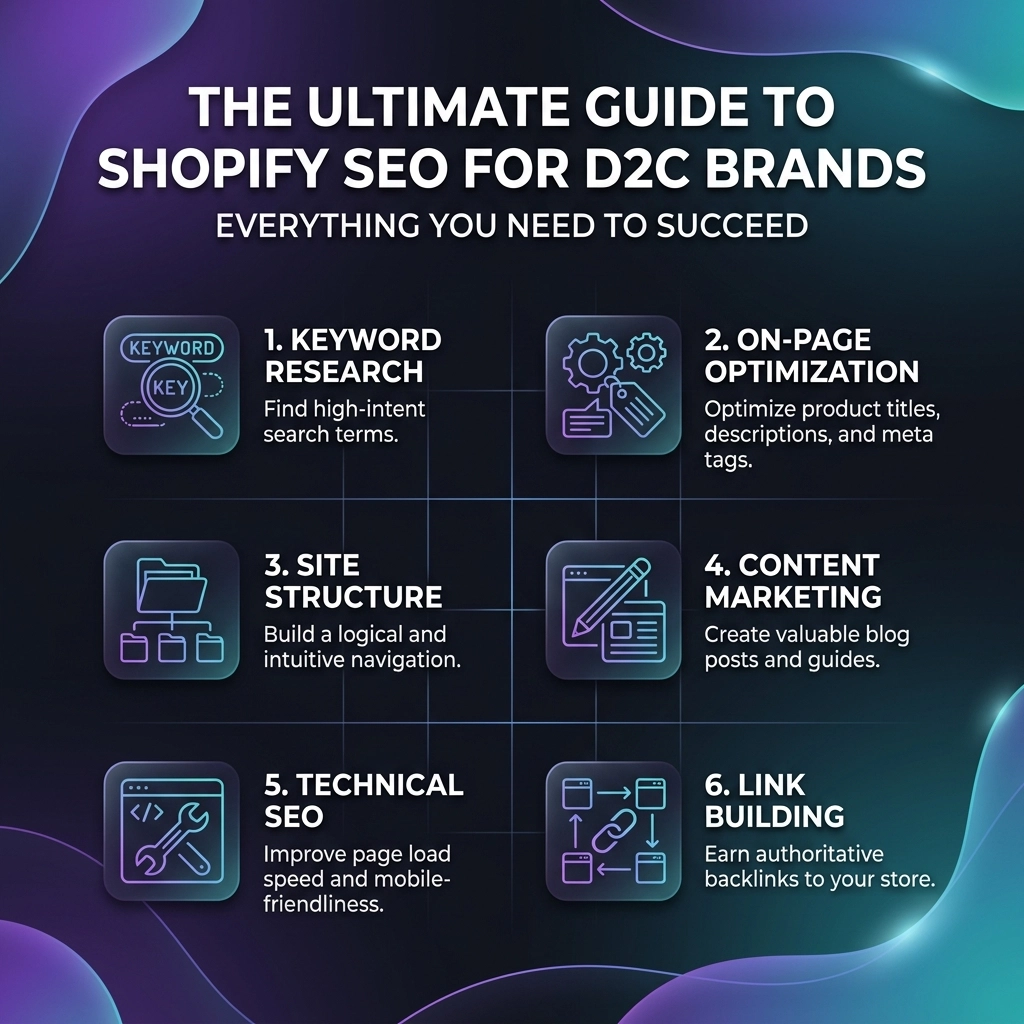
Scaling a D2C brand in 2026 isn't just about having a great product; it’s about making sure your target audience can actually find you in an increasingly crowded digital landscape. Whether you are selling high-end jewelry, sustainable streetwear, or clean beauty products, organic search remains your most cost-effective acquisition channel. While paid ads get more expensive every day, a solid SEO strategy compounds over time, building a foundation that drives traffic while you sleep.
If you’ve been feeling like your Shopify store is a hidden gem that nobody can find, you’re in the right place. This guide is designed to move you from "invisible" to "industry leader" by leveraging technical precision and creative content. We are going to dive deep into the specific systems that turn a standard Shopify store into a search engine powerhouse.
The Discovery Pillar: High-Intent Keyword Strategy
The biggest mistake most D2C founders make is targeting keywords that are too broad. If you sell skincare, trying to rank for "moisturizer" is a losing battle against giants like Sephora or Amazon. In 2026, the real wins happen in the "long-tail."
For fashion and beauty brands, your keyword strategy should be a mix of specific product attributes and lifestyle solutions. Think about how your customer actually talks. They aren't just looking for "shoes"; they are looking for "breathable vegan sneakers for summer travel" or "handcrafted 14k gold minimalist rings."
How to Find Your Niche Keywords
- Analyze Search Intent: Are they looking for information (How to style a trench coat) or are they ready to buy (Buy oversized vintage denim jacket)?
- Use AI Tools as Co-pilots: Tools like SEMrush or Ahrefs are great, but don't ignore the "People Also Ask" section on Google. It’s a goldmine for long-tail phrases.
- Competitor Gaps: Look at what other streetwear or jewelry brands are missing. If they have the products but no "How-to" content, that is your entry point.
Key Insight: Focus on "Zero-Volume" keywords. Sometimes tools say a keyword has no search volume, but if it’s hyper-specific to your niche (e.g., "botanical infused retinol for sensitive skin"), those few searchers are almost guaranteed to convert.

The Technical Layer: Shopify Website Design & Performance
You can have the best keywords in the world, but if your Shopify website design is clunky or slow, Google will penalize you. Technical SEO is the "engine" of your store. If the engine is broken, the car won't move: no matter how pretty the paint job is.
Speed is Your Best Friend
In the world of apparel and beauty, high-quality images are non-negotiable. However, heavy images are the #1 killer of site speed.
- Compress everything: Use WebP formats to keep images crisp but light.
- Limit your Apps: Every Shopify app adds a script. Too many scripts create "app bloat," dragging your load time into the gutter. If you haven't used an app in 30 days, delete it.
- Mobile-First is Only-First: Over 80% of D2C fashion traffic comes from mobile. If your mobile navigation is frustrating, your bounce rate will skyrocket.
Clean Site Hierarchy
Search engines love a logical structure. For a D2C brand, this usually looks like:
- Home Page
- Collection Pages (e.g., Women's Streetwear, Men's Hoodies)
- Sub-Collections (e.g., Oversized Hoodies, Graphic Tees)
- Product Pages (The final destination)
Avoid "flat" structures where every page is just one click from the home page. Use internal linking to guide search bots through your hierarchy. This passes "link juice" from your high-authority pages to your specific products.
The Trust Pillar: Optimizing Product Pages for Conversion
SEO gets them to the page; Conversion Rate Optimization (CRO) keeps them there. On Shopify, your product pages are your closing pitch. If you want to rank for "Shopify SEO services" or similar high-value terms, you need to prove to Google that users love your pages.
SEO-Driven Product Descriptions
Stop using the manufacturer's default description. It’s boring, and worse, it’s duplicate content.
- Write for humans first: Use sensory language. Instead of "Blue silk dress," try "Cerulean sand-washed silk slip dress with an effortless drape."
- Optimize Meta Titles & Descriptions: Keep your titles under 60 characters and descriptions under 155. Include your primary keyword and a clear value proposition like "Free Shipping" or "Ethically Sourced."
- Alt Text for Images: Don't just leave it blank. Describe the image for accessibility and SEO: "Woman wearing gold hoop earrings and white linen shirt."
Leveraging Schema Markup
Schema is a piece of code that tells Google exactly what your page is about. For D2C brands, "Product Schema" is vital. It allows Google to show your price, star rating, and "In Stock" status directly in the search results. This significantly increases your click-through rate (CTR).

The Authority Pillar: Content Marketing and Backlinks
If you want to dominate the fashion or beauty space, you need to be seen as an authority. This is where blogging and external outreach come into play. Many brands treat their blog as an afterthought, but it’s actually your best tool for capturing "top-of-funnel" traffic.
The Power of the D2C Blog
Create content that solves problems.
- Jewelry Brands: "The Ultimate Guide to Cleaning Lab-Grown Diamonds."
- Beauty Brands: "5 Morning Routines for Glowing Skin in 10 Minutes."
- Apparel Brands: "How to Transition Your Streetwear from Day to Night."
These posts target users who are researching. Once they trust your advice, they are far more likely to buy your products. Link these blog posts back to your collections to create a seamless shopping experience.
Building Quality Backlinks
A backlink is like a "vote of confidence" from another website. Focus on:
- Niche Features: Get your products featured in gift guides or style blogs.
- Collaborations: Partner with influencers or other brands for co-authored content.
- Guest Posting: Write authoritative articles for industry publications.
Pro Tip: Never buy cheap backlinks from shady sites. Google’s AI is smart enough to spot them, and they will do more harm than good. Focus on quality over quantity.
Challenges: The Reality of Shopify SEO
Let’s be honest: SEO isn't always easy. D2C founders often face specific hurdles:
- The "Duplicate Content" Trap: Shopify creates multiple URLs for the same product based on collections. Ensure your theme uses "Canonical Tags" correctly to tell Google which version is the master copy.
- Heavy Theme Files: Some "out-of-the-box" Shopify themes are coded poorly. If your theme is slow, no amount of SEO can save you. You might need professional Shopify website design help to clean up the code.
- Patience: SEO takes time. It’s a marathon, not a sprint. You might not see massive results for 3-6 months, but once the momentum starts, it’s hard to stop.
| Pro | Con |
|---|---|
| High ROI over the long term | Takes time to see results |
| Builds brand authority and trust | Requires consistent content updates |
| Decreases reliance on paid ads | Technical fixes can be complex |
| Improves user experience (UX) | Requires ongoing monitoring and tweaks |
Next Steps: Your 2026 SEO Implementation Checklist
Ready to turn your Shopify store into a growth machine? Follow these steps in order. Start small, stay creative, and don't get overwhelmed.
- Audit Your Speed: Use Google PageSpeed Insights. Identify the top three scripts or images slowing you down and fix them today.
- Fix Your Meta Data: Spend 30 minutes every day updating the titles and descriptions of your top 10 selling products.
- Submit Your Sitemap: Ensure your sitemap is submitted to Google Search Console so the bots know you exist.
- Create a Content Calendar: Commit to one high-quality blog post per week that targets a long-tail keyword in your niche.
- Optimize for AI Search: Use structured data (Schema) to ensure AI-powered search engines can easily parse your product data.
- Clean Up Redirects: Fix any 404 errors. A broken link is a lost customer.
- Partner with Experts: If technical SEO feels like a foreign language, consider professional Shopify SEO services.

Building a successful D2C brand requires a blend of art and science. While you handle the creative vision and product development, let the systems of SEO handle the discovery. If you need a partner to navigate the complexities of Shopify growth, we at Thriftizer specialize in scaling brands just like yours. You can also find us and see our track record on our Shopify Expert profile.
Never ever think of giving up on your organic growth. The best time to start was yesterday; the second best time is right now. Automate the workflow, identify the gaps, and watch your brand scale to new heights.