You’ve spent months perfecting your collection. The fabrics are premium, the designs are sharp, and your Shopify store looks like a million bucks. But there’s a nagging problem: the digital doors are open, but the hallway is empty. In the high-stakes world of D2C fashion, beauty, and apparel, being "pretty" isn't enough. You need to be "found."
Scaling an apparel brand in 2026 requires more than just a gut feeling for trends. It requires a systematic approach to organic visibility. This is where professional Shopify SEO services come into play. SEO isn't a one-time task you "set and forget"; it’s the engine that drives sustainable, long-term growth without the soul-crushing cost of rising ad spends.
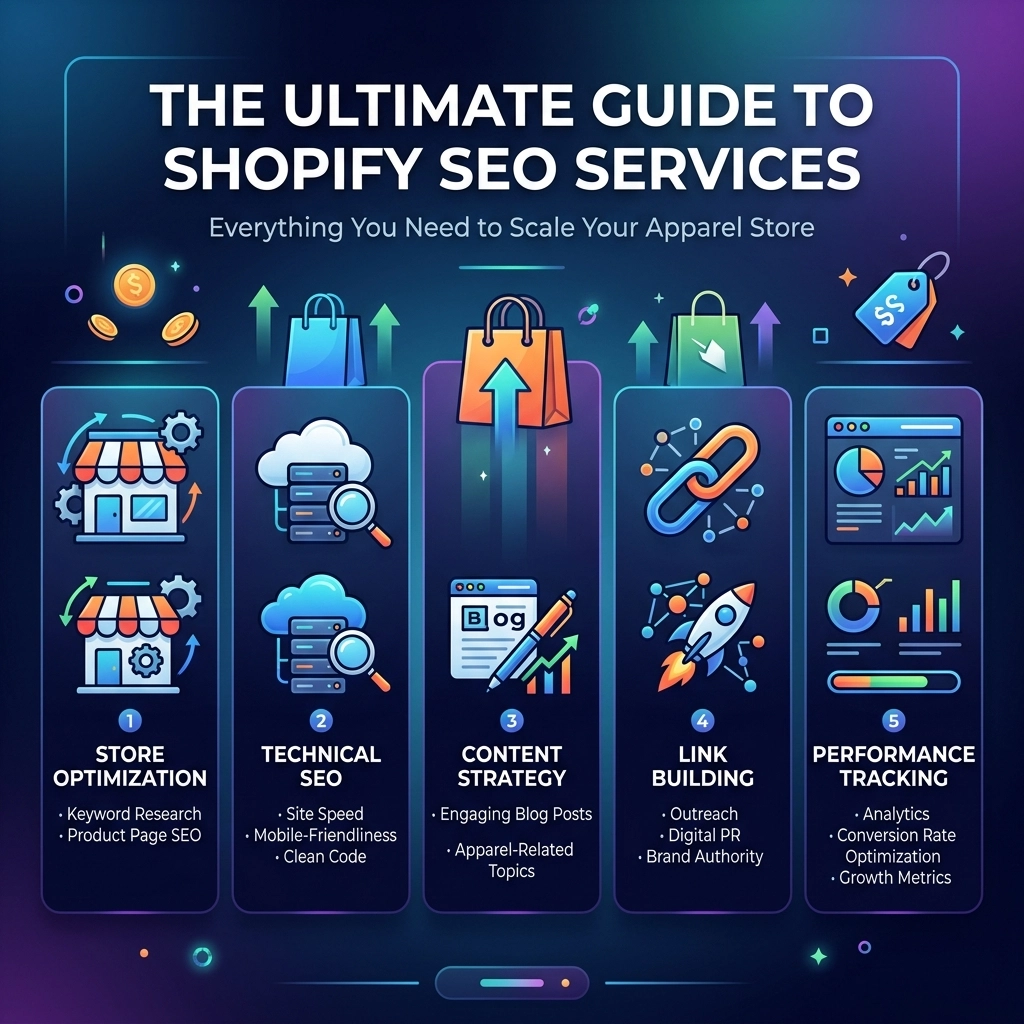
At Thriftizer, we see SEO as your brand's digital storefront manager. It ensures that when someone searches for "sustainable streetwear" or "organic cotton summer dresses," your brand is front and center. Let’s dive into the ultimate framework for scaling your apparel store through the power of search.
The Shopify SEO Myth: "It’s All Built-In"
Let’s clear the air. Shopify is an incredible platform: arguably the best for D2C brands. It comes with a solid foundation: clean code, fast servers, and a responsive structure. However, there is a common myth that Shopify "does the SEO for you."
Shopify provides the car; you still need to drive it. Out-of-the-box, Shopify creates a basic sitemap and lets you edit meta tags, but it won't conduct keyword research, optimize your image-heavy lookbooks, or build the high-authority backlinks required to beat the industry giants. To truly scale, you need a custom-built engine.

Pillar 1: The Technical Foundation (The "Bones" of Your Store)
Before you start writing blog posts or chasing influencers, your technical SEO must be flawless. If your site is slow or confusing to Google’s crawlers, your content won't matter.
Speed as a Style Choice
In fashion, first impressions are everything. If your homepage takes five seconds to load because of unoptimized 4K hero images, 40% of your visitors are gone before they see your designs.
- Compress everything: Use WebP formats for your product photography.
- App Audit: Delete the "ghost apps" you installed six months ago and forgot about. They still load scripts that slow you down.
- Lazy Loading: Ensure images only load as the user scrolls.
Mobile-First is the Only Way
Over 70% of apparel shopping happens on mobile devices. Your Shopify website design must be more than just "responsive": it needs to be "mobile-obsessed." Google uses mobile-first indexing, meaning it ranks your site based on how the mobile version performs, not the desktop version.
Clean URL Structures
Avoid messy URLs. Instead of /products/dress-123-final-v2, aim for /products/womens-linen-midi-dress-black. It’s better for the user and much clearer for search engines.
Pillar 2: Discovery & Keywords (The "Vibe" and Intent)
Keywords are the bridge between a customer's desire and your product. For apparel brands, the magic happens in the "long-tail."
Mapping the Fashion Journey
Don't just target "dresses." You’ll get crushed by the global conglomerates. Instead, target specific, high-intent phrases:
- Informational: "How to style an oversized blazer for work."
- Commercial: "Best sustainable streetwear brands 2026."
- Transactional: "Men’s recycled polyester running shorts."
Using Tools as Your Co-Pilot
Think of tools like Ahrefs, SEMrush, or Google Keyword Planner as your digital scouts. They tell you where the "empty spaces" are in the market. If everyone is fighting for "summer shirts," but no one is ranking for "breathable hemp travel shirts," that’s your opening.
Key Insight: Fashion is seasonal, but SEO is evergreen. Start optimizing for your "Winter Collection" keywords at least three months before the first snowflake falls.

Pillar 3: On-Page Excellence & Visual SEO
Fashion is a visual medium. This creates a unique challenge for SEO because Google’s bots can’t "see" how beautiful your new floral print is: you have to tell them.
ALT Text: More Than a Checkbox
Every single image on your store should have descriptive ALT text. This isn't just for accessibility (though that’s vital); it’s for Google Image Search. Many shoppers start their journey by browsing images. If your ALT text says "Blue Silk Wrap Dress Side View," you’re far more likely to appear in those results.
The Power of Unique Product Descriptions
Never, ever use the manufacturer’s default description. It’s a recipe for "duplicate content" penalties.
- Write for humans: Describe the feel, the drape, and the occasion.
- Optimize for bots: Naturally weave in your primary and secondary keywords.
- Use Bullet Points: List materials, sizing tips, and care instructions to make the page skimmable.
Internal Linking: The Secret Path
Don't let your collection pages be dead ends. Use internal links to guide users (and bots) through your store. If you’re selling a skirt, link to the matching top. This keeps users on your site longer (reducing bounce rate) and helps Google understand the relationship between your products.
Pillar 4: Content Strategy (The "Story" that Sells)
A blog isn't just a place to post "We’re having a sale." It’s your most powerful tool for capturing top-of-funnel traffic.
Styling Guides and Trend Reports
D2C brands that provide value win. Create content that solves the "What do I wear?" problem.
- "5 Ways to Wear One Capsule Wardrobe"
- "The Ultimate Guide to Streetwear Trends in 2026"
- "Why Organic Cotton Matters for Sensitive Skin"
These posts attract people who aren't necessarily looking to buy right now but will remember your brand when they are ready.

Pillar 5: Trust and Authority (The Digital Handshake)
In the beauty and apparel space, trust is the currency of conversion. SEO and Conversion Rate Optimization (CRO) are two sides of the same coin.
Structured Data (Schema)
Schema is a piece of code that tells Google: "This is a product, it costs $49, and it has 150 five-star reviews." When this shows up in search results (Rich Snippets), your click-through rate (CTR) skyrockets.
The Challenge of Backlinks
Google views a link from a reputable fashion blog or news site as a "vote of confidence." Building these links is the hardest part of SEO, but also the most rewarding.
- Pros: Massive boost in domain authority and organic rankings.
- Cons: Time-consuming and requires genuine PR effort. You can't just buy your way to the top with low-quality links.
Pros and Cons of Professional Shopify SEO Services
| Feature | Pros | Cons |
|---|---|---|
| DIY SEO | No direct cost, full creative control. | High learning curve, very slow results, easy to make technical errors. |
| Professional SEO | Data-driven strategy, technical expertise, faster scaling. | Requires monthly investment, requires patience for organic "bloom." |
| Paid Ads (PPC) | Instant traffic, easy to track ROI. | Traffic stops the second you stop paying; costs keep rising. |
Next Steps: Your Scaling Checklist
If you're ready to stop guessing and start growing, follow this 5-step implementation plan:
- Identify the Gaps: Run a technical audit of your store. Check your mobile speed and broken links.
- List Your Tasks: Prioritize your top 10 selling products and rewrite their meta titles and descriptions.
- Automate the Workflow: Use tools to help with image compression and basic SEO tagging. (Check out our guide on how to automate your workflow for creative ideas).
- Create a Content Calendar: Commit to two high-quality blog posts per month that target long-tail keywords.
- Build Your Authority: Reach out to three niche influencers or bloggers for genuine product reviews and backlinks.
Why Partner with Experts?
Let’s be honest: you’re a founder, a designer, or a creative director. Your time is best spent on the "soul" of your brand: the products and the vision. Navigating the ever-changing landscape of search algorithms, Core Web Vitals, and keyword clusters is a full-time job.
At Thriftizer, we specialize in helping D2C brands navigate this complexity. We don't just "do SEO"; we build growth engines that combine Shopify SEO services with high-converting Shopify website design.
Scaling an apparel brand is a marathon, not a sprint. Start small, stay creative, and never ever think of giving up on your organic growth. The brands that win are the ones that show up consistently where their customers are looking.
Ready to see how your store stacks up? Explore our full range of digital marketing solutions at Thriftizer or visit our Shopify Expert profile to see how we’ve helped brands just like yours scale to new heights.
The runway is clear. It’s time to take off.