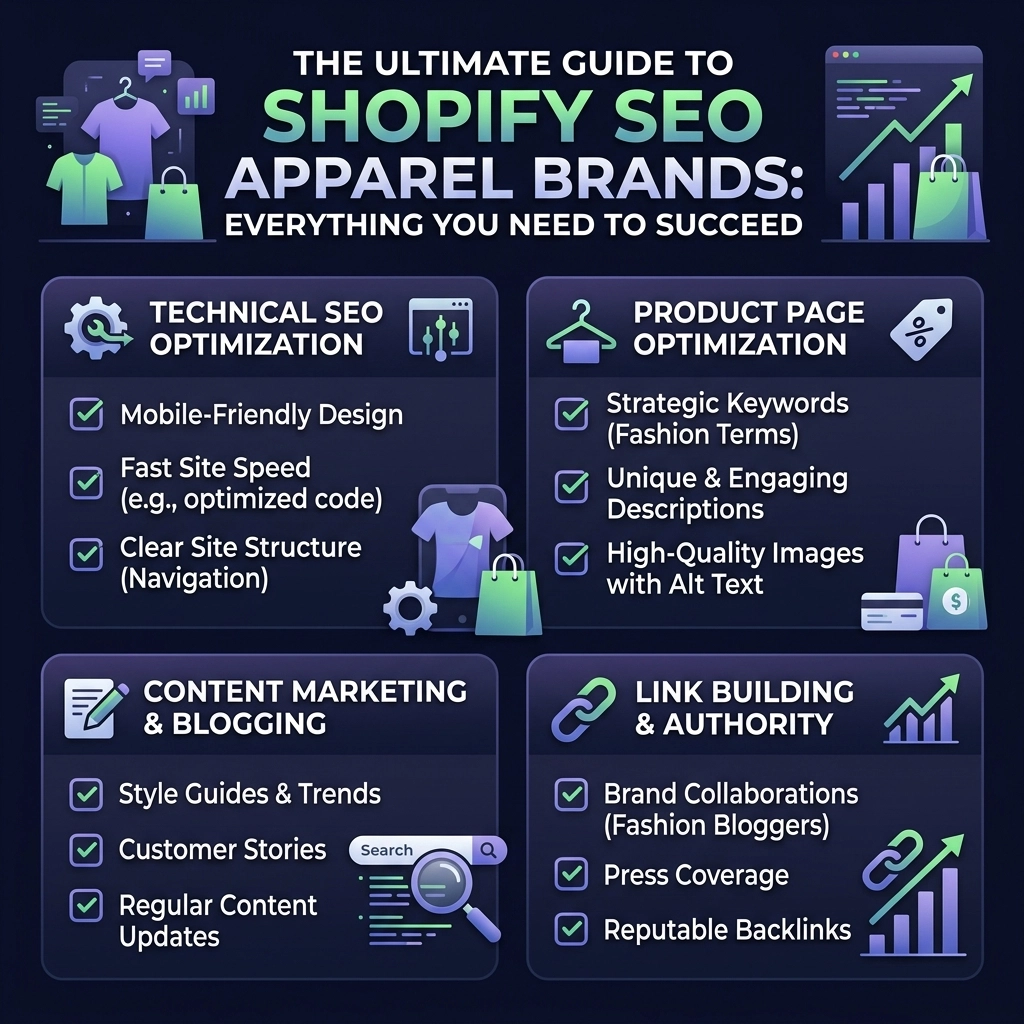
In 2026, the D2C apparel space isn't just crowded: it’s a digital roar. For fashion, beauty, and streetwear brands, having a stunning Shopify website design is only half the battle. If your target customers can’t find you when they search for "oversized vintage hoodies" or "sustainable silk slip dresses," your beautiful aesthetic is essentially a billboard in the middle of a desert.
Scaling a brand requires a shift from "hoping to be found" to "engineering discovery." This guide breaks down the complex world of Shopify SEO into a layered, actionable framework designed specifically for the apparel industry. Whether you are a founder looking to DIY or searching for professional Shopify SEO services, these strategies will help you dominate the search engine results pages (SERPs).
The Pillar of Discovery: Master Your Keyword Strategy
Keywords are the compass of your SEO strategy. In the fashion world, broad terms like "clothing" or "shoes" are nearly impossible to rank for and often lead to low conversion rates. You need to target high-intent, long-tail keywords that match exactly what your customer is typing into that search bar.
Focus on Transactional Modifiers
Your customers rarely search for just "dresses." They search for specific solutions to their wardrobe needs. Target keywords that include:
- Style/Occasion: "Boho wedding guest dress," "streetwear cargo pants."
- Material: "Organic cotton basics," "vegan leather boots."
- Attributes: "High-waisted flared jeans," "oversized graphic tees."
- Intent: "Buy sustainable activewear," "best jewelry for sensitive skin."
The 2026 Shift: Searching by Aesthetic
In 2026, search behavior has shifted toward "aesthetics." People search for "old money aesthetic outfits" or "cottagecore summer tops." If your brand fits a specific niche, incorporate these aesthetic-driven keywords into your collection descriptions and blog titles.
Pro Tip: Don't ignore your internal site search data. Look at what users are typing into your store's search bar. This is a goldmine for discovering exactly what terms your audience uses to describe your products.

The Pillar of Structure: Building a Logical Hierarchy
Google loves a store that makes sense. A messy site structure confuses crawlers and frustrates users, leading to high bounce rates and lower rankings. For apparel brands, a "flat" hierarchy is best: meaning no page should be more than three clicks away from the homepage.
The Ideal Apparel Site Map
- Homepage: Your brand's "Front Window."
- Category/Collection Pages: (e.g., Women’s, Men’s, Accessories).
- Sub-Category Pages: (e.g., Women’s > Outerwear > Blazers).
- Product Pages: The individual items.
Navigation and Breadcrumbs
Keep your navigation menu clean. Limit your main menu to 5–7 top-level categories. Use breadcrumbs (e.g., Home > Men’s Streetwear > Hoodies) to help users navigate back easily. This also provides Google with clear internal linking paths, which boosts the authority of your collection pages.
The Pillar of Trust: Technical SEO and Shopify Website Design
Technical SEO is the engine under the hood. If the engine is stalling, the car won't move. In the apparel world, visuals are king, but heavy images are the number one killer of site speed.
Image Optimization: The Non-Negotiable
High-resolution photos are essential for conversion, but they can destroy your Shopify website design performance if not handled correctly.
- Compress everything: Use tools to reduce file size without losing quality.
- Descriptive File Names: Rename "IMG_5678.jpg" to "vintage-denim-jacket-mens.jpg" before uploading.
- Alt Text: This is the text that describes an image to search engines and visually impaired users. Be descriptive but natural: "Model wearing a blue organic cotton oversized t-shirt."
Mobile-First is the Only Way
Over 80% of fashion traffic comes from mobile devices. Your site must be lightning-fast and easy to navigate with a thumb. If your checkout process is clunky on a smartphone, your SEO efforts are being wasted at the final hurdle.
Key Insight: Google uses mobile-first indexing. This means Google primarily looks at the mobile version of your site to decide your ranking. If your mobile experience is poor, your desktop ranking will suffer too.

The Pillar of Intent: On-Page Optimization
Every page on your Shopify store should be optimized for a specific goal. This involves balancing technical "crawlablity" with high-converting copy.
Product Page SEO
- Title Tags: Keep these under 60 characters. Include the primary keyword and the brand name. Example: Sustainable Linen Wrap Dress – [Your Brand Name].
- Meta Descriptions: Think of this as your ad copy. You have 155 characters to convince someone to click. Mention "Free Shipping," "Eco-friendly," or "Unique Designs."
- H1 Headers: Use only one H1 per page, and it should be your product title.
- Unique Descriptions: Never use the manufacturer's description. Write original, engaging copy that explains the fit, the feel, and the vibe.
Collection Page SEO
Collection pages are often your highest-ranking assets. Don't leave them empty of text. Add a short, keyword-rich description (100–200 words) at the top or bottom of the collection page to give search engines more context about what you’re selling.
The Pillar of Authority: Content Strategy for Growth
SEO is no longer just about keywords; it's about authority. Creating consistent, high-quality content tells Google you are an expert in your niche.
Blogging for Apparel Brands
Don't just blog about your sales. Blog about what your customers care about.
- Style Guides: "5 Ways to Style a Trench Coat for Spring."
- Educational Content: "How to Care for Raw Denim."
- Trend Reports: "Streetwear Trends to Watch in Summer 2026."
Internal linking is your secret weapon here. When you write a blog post about "Spring Outfits," link those keywords directly to your "Spring Collection" page. This passes "SEO juice" from your blog to your products.

Balancing the Pros and Cons of Shopify SEO
Before you dive in, it’s important to manage expectations. SEO is a long game, not a "set it and forget it" task.
The Pros
- Compounding ROI: Unlike paid ads, organic traffic doesn't stop the moment you stop paying.
- Higher Conversion: Organic searchers often have higher intent than social media scrollers.
- Brand Credibility: Ranking on the first page builds trust instantly.
The Challenges
- Time-Intensive: It takes 3–6 months to see significant movement.
- Platform Limits: Shopify is great, but it has some rigid URL structures (like
/products/and/collections/) that can be annoying for SEO purists. - Constant Updates: Google updates its algorithm frequently, requiring you to stay agile.
Start small, stay creative. You don't need to optimize 1,000 products today. Start with your top 10 best-sellers.
Your 2026 Shopify SEO Implementation Checklist
Ready to take action? Follow these steps to start climbing the rankings:
- Set up Google Search Console: Monitor your site's health and see which keywords are actually driving traffic.
- Optimize your Image Alt Text: Go through your top-selling collection and ensure every image has a descriptive alt tag.
- Fix Broken Links: Use a "404 redirect" app to ensure customers (and Google) don't hit dead ends.
- Install a Review App: User-generated content (reviews) adds fresh, keyword-rich text to your product pages automatically.
- Implement Schema Markup: Use JSON-LD to show star ratings and prices directly in Google search results.
- Review Page Speed: Run your site through Google PageSpeed Insights and address the biggest "red" flags.
Scaling to the Next Level
SEO is the foundation of long-term D2C success. While it requires patience, the payoff of a steady stream of organic, high-intent traffic is what separates the billion-dollar brands from the ones that fade away. Framing your technology as a co-pilot allows you to focus on the human side of your brand: the creativity, the design, and the community.
If you find the technical side of Shopify SEO services overwhelming, or if you need a specialized Shopify website design that prioritizes both aesthetics and performance, don't hesitate to seek expert guidance. At Thriftizer, we specialize in helping D2C brands navigate the complexities of digital growth.
Never ever think of giving up on your organic growth. The "snowball effect" of SEO is real: you just need to start rolling. For more specialized help from vetted professionals, you can also explore the Thriftizer Solutions Shopify Expert profile.
Next Steps for Implementation:
- Identify your top 5 "money" keywords.
- Audit your homepage and top 3 collection pages for those keywords.
- Compress all images on your homepage to improve load speed.
- Write one "how-to" style blog post this week.
- Check your mobile checkout flow for any friction points.
Automate the workflow where you can, but never lose the human touch that makes your apparel brand unique. Stay consistent, stay optimized, and watch your brand grow.